
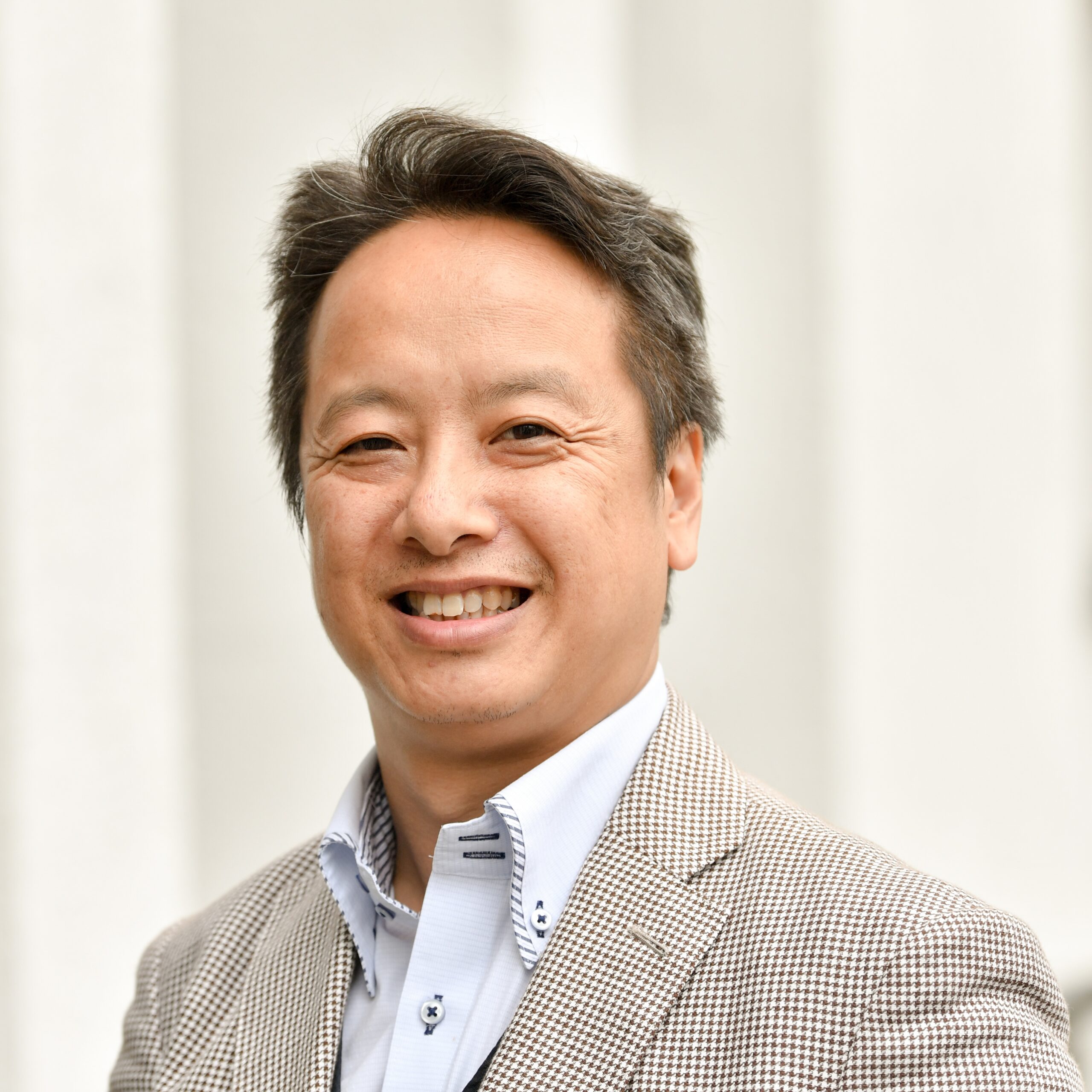

Sunny talks to Prof Gordon Cheng, Professor of Cognitive Systems at the Technical University of Munich in Germany, who builds humanoid robots that can feel their environment using artificial skin. In this episode he talks about how the skin was designed, how it improves safety, and why neuromorphic engineering will be important for machine autonomy. After the interview, discussion follows with Giulia and Ralph.
Articles and Papers
- A comprehensive realization of robot skin: sensors, sensing, control, and applications
- Neuroengineering challenges of fusing robotics and neuroscience
- Purposive learning: Robot reasoning about the meanings of human activities
- VIDEO: Feather control of an UR5 covered with artificial tactile skin
- VIDEO: Better bipedal humanoid walking with skin
From the discussion
- DARPA Revolutionizing Prosthetics
- Conveying tactile feedback in sensorized hand neuroprostheses using a biofidelic model of mechanotransduction
- Real-time implementation of biofidelic SA1 model for tactile feedback
- Prosthesis with neuromorphic multilayered e-dermis perceives touch and pain
- Neuromorphic capacitive tactile sensors inspired by slowly adaptive mechanoreceptors
- Piezoelectric oxide semiconductor field effect transistor touch sensing devices
- Neural network chip [ETANN] joins the collection
- Prophesee
- Brainchip
- Blumind
- Sagence AI
- Synthetic touch: haptic data is revolutionizing consumer products
- Neuromorphic sensorimotor loop embodied by monolithically integrated, low-voltage, soft e-skin
Episode Credits
Producer/Writer: Sunny Bains
Co-hosts: Sunny Bains and Giulia D’Angelo
Editor: Rose Gotto
Audio Production: Taylor Marvin, Coupe Studios Music and Sound Design
Music: 3 of Diamonds by Matt Harris
For EETimes.com
This episode is produced in conjunction with EETimes. Podcast reproduced with permission.
